“The Deep End”
Some sources say Alexander the Great regretted not being a good swimmer. I wish I could tell him it ain’t all it’s cranked up to be.
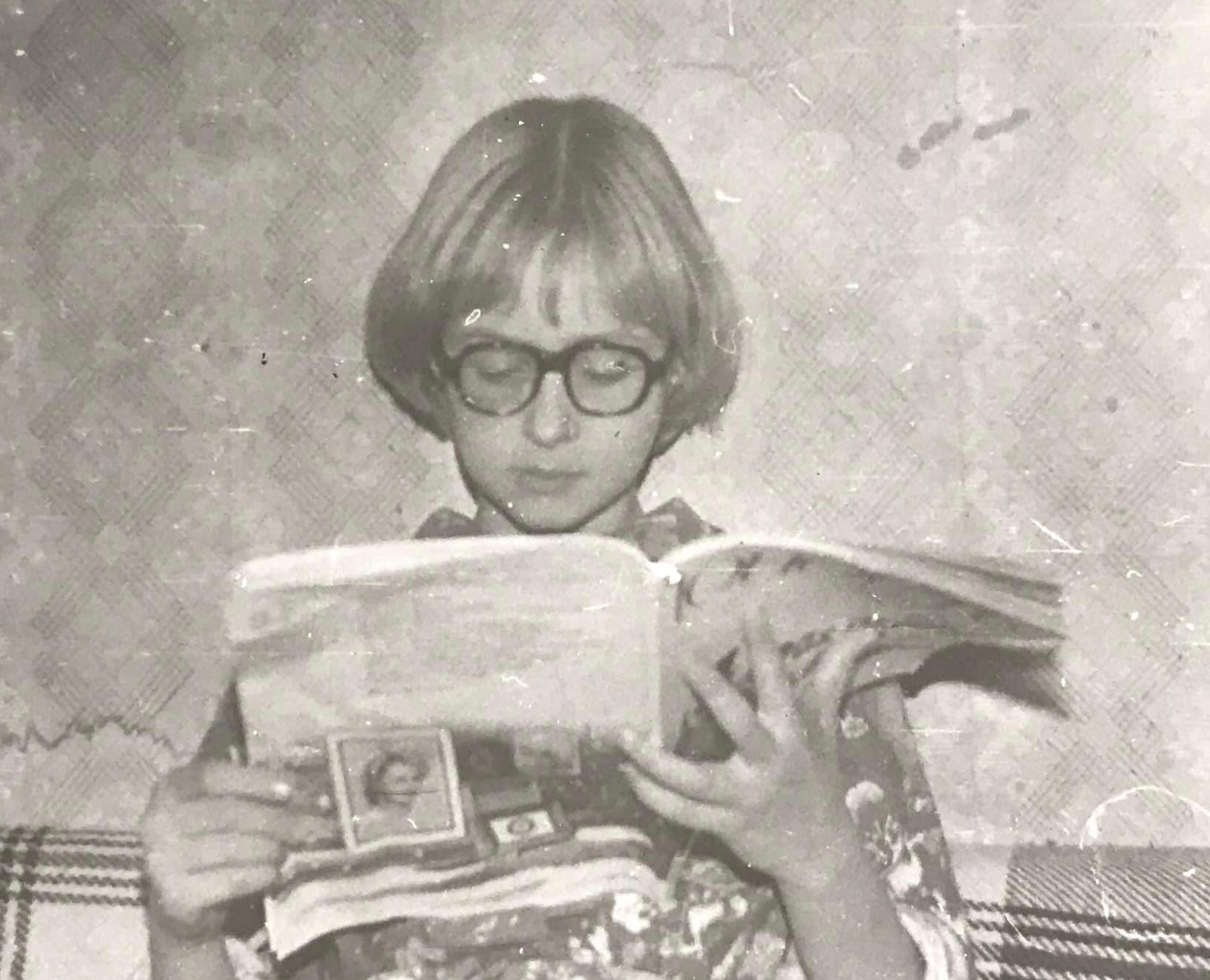
By the time I was 3, I was reading fluently, could memorize and recite a rhyme on the fly, and took to writing with ease. All this caused problems in school: by 1st grade I was too ahead of the program and bored in class, which caused shenanigans. All I wanted was to do the class work fast, so I could socialize. (The shenanigans continued well into middle school, when the teacher sat me together with a deaf-and-mute kid, Vitaliy, thinking that would slow me down. It took Vi and I about 5 minutes to figure out how to swap the notebooks, undetected, so I could solve my math, then quickly do his, mimicking his handwriting, so we could then play paper-and-pencil games hidden under our notebooks, right under the teacher’s nose).
But life also had a shadow side. After the failure at the gymnastics, Dad dropped me off at a swim team and said coach Galina is his old friend in sports. And that I shouldn’t embarrass him there.
It took me a while to realize the rest of the swim team were different. Unlike me, they were all attending a sports-focused school together, after qualifying through a rigorous selection program as pre-schoolers. The academics were more of an afterthought: the real goal of the school was to feed the future youth Olympic reserve. Hence, they’d start every day weight lifting at dawn, and trained in the pool every day and twice on a Sunday, all while on a special diet.
When Dad brought me there, the deal was for me to only train an hour, 3 times a week. The difference between us was obvious to begin with, and from the 2nd to 7th grade it became tragically staggering. I learned to swim, but there was no catching up. I was forever locked in the farthest, “slow” lane in training and would always come last in the competitions. Through puberty, those boys and girls developed a perfectly triangular physique (they call it “a dorito figure” here in the US), and after every summer they spent away in swim camps, they’d return more lean, tan and looking more and more like Spartans.
Me, on the other hand, started looking like someone that Spartans would throw off the cliff. All the obsessive reading I was doing – including at night, with a flashlight under the blanket – ruined my eye sight. By the time I was in 3rd grade, glasses became permanent. By the 6th grade, my vision reached severe myopia at negative 6.5. The soft contact lenses were not available then in the Soviet Union, so my life was glasses on, or half blind.
Being blind in the pool meant I couldn’t even tell who’s coming or going in my lane. Being both blind and slow made me a nuisance. The Greek Gods on the swim team have long stopped minding me as a sentient being, and Galina did not have a moment to spare on something so unOlympicable. When a faster swimmer would come up behind me in the lane during training, they would just steam roll over me, pushing me straight under water where I’d panic and rush to the surface, squinting to figure out which way should I scurry to get out of the way before a second, third, or fourth assault would happen, as they kept swimming in circles like ruthless sharks, out for blood.
For years, I lived this double life. On one hand, my school theatre club was on fire, and I played a full gamut of roles, from a geriatric Genie in a Bottle (complete with a beard) to a cranky Goatess with an attitude (my own hair teased and lacquered to death into an upright set of horns). The theatre gang was tight and vibrant. Тhe home library was chock full of endlessly exciting books, from Dumas to Bradbury. I was acing every subject in school and wrote poetry by the bucket.
But three evenings a week I had to walk across the frozen park to the palace of doom, take off my glasses, strip to my bones, and plunge, half blind and shivering, into my own personal hell.
(to be continued)
Days to race: 22
#DardaDiary
 Tripping Maria